

You Missed the SB 721 Balcony Inspection Deadline. Here Is What LA Owners Do Now.
The statewide deadline to have your balconies, decks, stairways and walkways inspected was January 1, 2026. It is now well past that date, and it is an easy deadline to have missed, because the law never generated a letter in the mail the way RSO registration or the soft-story program did.
That is the trap. SB 721 is largely complaint-driven and renewal-driven rather than notice-driven. The City may never tell you that you are exposed. The question can come first from your insurance carrier at renewal, from a buyer’s due diligence list, or from a plaintiff’s attorney after something gives way.
What the law actually requires
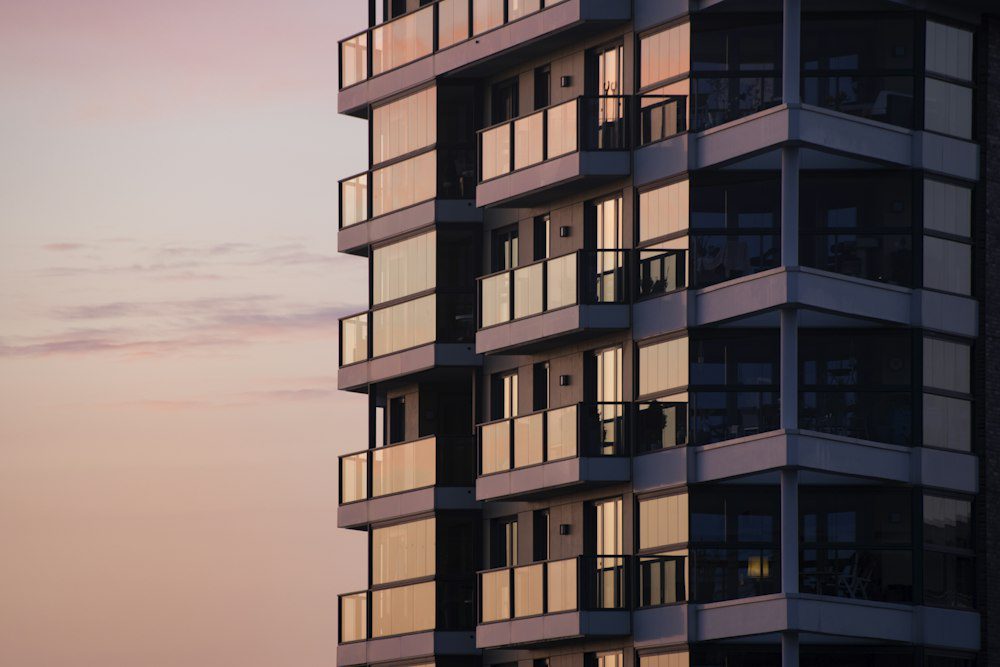
SB 721 added Health & Safety Code section 17973 and applies to buildings with three or more multifamily dwelling units. It reaches what the statute calls exterior elevated elements, or EEEs: balconies, decks, landings, stairways and elevated walkways that are more than six feet above ground level, that are supported substantially by wood or wood-based products, and that are designed for human occupancy or use.
Two things owners consistently get wrong here. First, the scope is wider than the nickname suggests — the exterior staircase and the second-floor walkway on a classic LA dingbat are in scope even if the building has no balconies at all. Second, three units is the trigger. A triplex counts. Condominiums governed by an HOA fall under the parallel statute, SB 326, on a nine-year cycle instead.
If your building has no wood-framed elevated elements, you are not exempt by silence. You still want a licensed professional to put that determination in writing. A one-page letter from a qualified inspector is what satisfies an underwriter or a buyer. Your own opinion is not.
What a compliant inspection looks like
The inspection has to be performed by a licensed architect, a licensed civil or structural engineer, a general contractor holding an A, B, or C-5 license with at least five years of experience, or a certified building inspector. Your handyman, your roofer, and your soft-story engineer’s structural letter are not substitutes.
The inspector examines a random but statistically significant sample of the EEEs — enough that the results can be projected to the building as a whole with reasonable confidence — and evaluates load-bearing components and their associated waterproofing. The report has to state the current condition, the expected remaining service life, and whether any element poses an immediate threat to safety. You get a copy within 45 days, and you are required to retain the report for two inspection cycles.
Budget realistically. The inspection cost depends on unit count and on how much destructive testing is needed to see the framing behind the waterproofing, so get two quotes. Either way, it is the cheap part of this article.
If the inspector finds something
The statute splits findings into two tracks, and the clocks are short:
- Immediate threat to safety. The inspector must notify the owner and the local enforcement agency within 15 days. You are expected to take immediate preventive measures — typically shoring, or fencing the element off and barring tenant use — while repairs are arranged.
- Repairs not posing an immediate threat. You have 120 days to apply for the permit, and 120 days from permit issuance to complete the work, with extensions available from the local building official for good cause.
Note what the first track means operationally in a rent-stabilized building: you may have to restrict a tenant’s use of their own balcony on short notice. Do that in writing, with a clear explanation and a repair timeline, and do not treat it as a reduction in the unit that goes unaddressed. A balcony taped off for eight months without communication is how a safety measure turns into a habitability claim.

The penalty math
If required repairs are not made and the violation remains uncorrected 30 days after notice from the local enforcement agency, the owner is subject to a civil penalty of $100 to $500 per day until the repairs are complete. At the top of that range, a year of inaction is roughly $182,500.
Worse than the daily number is the collection mechanism. The local jurisdiction may record a building safety lien against the parcel, which carries the force, effect and priority of a judgment lien from the date of recording, and which can be enforced by foreclosure. That lien also sits in front of you at refinance and at sale — escrow will not close over it.
The enforcement agency also has to be notified of the violation by the inspector. Once a qualified professional has documented an unsafe condition, the file exists independently of whether you act on it. “We were going to get to it” is not a position you want to be in with a dated report in the record.
The exposure nobody budgets for
Two quieter costs usually exceed the fines.
Insurance. Carriers can ask for an EEE inspection report at renewal on wood-framed multifamily, on the same application that already asks about your soft-story status and your roof age. Not having one gives an underwriter a reason to decline or surcharge. If you are already fighting to keep a carrier, this is a bad additional reason to lose one.
Litigation. The reason SB 721 exists is the 2015 Berkeley balcony collapse that killed six people. If someone is injured on a non-compliant element, a plaintiff will argue negligence per se — that the violation of a safety statute establishes the breach — and your missed deadline becomes exhibit one rather than a background detail. That shifts the entire posture of the case before anyone argues about the actual condition of the wood.
Getting into the units
SB 721 also amended Civil Code section 1954 to make inspection of these elements a permitted purpose of entry. You still owe proper written notice — 24 hours is presumed reasonable — and entry during normal business hours. Most EEE inspection work happens from the exterior, but access through units is sometimes needed for interior-side framing or for a balcony that is only reachable through a living room. Schedule the whole building in one or two coordinated days rather than one-off knocks; it reduces both cost and tenant friction.
Can you recover the repair cost?
Sometimes, partially, and slowly. In rent-stabilized units, structural repairs of this kind may qualify for a capital improvement or primary renovation pass-through through the Los Angeles Housing Department, subject to the program’s caps, amortization schedules, and tenant notice requirements — the same machinery LA owners already know from soft-story retrofit cost recovery. It is an application process with documentation requirements, not an automatic rent adjustment, and the recovery is spread over years. Model the repair as a capital expense you are funding, with partial recovery as upside.
What to do this month
- Determine scope in writing. Confirm whether your building has EEEs in scope and get the determination on letterhead either way.
- Book a qualified inspector now, not after your next renewal notice. Confirm the license type before you sign.
- Pull the file. If a prior owner had an inspection done, you may already be compliant and not know it. Check your escrow file and ask your prior management company.
- Tell your insurance broker that the inspection is scheduled. A scheduled inspection answers the renewal question far better than silence.
- Calendar the next cycle. Re-inspection is required every six years. Put the date in the same place you keep your RSO registration renewal.
- Budget the repair before the report arrives. On older wood-framed LA stock, waterproofing failure at the balcony-to-wall connection is the common finding, and it is rarely a small line item.

Frequently asked questions
I have a duplex. Does SB 721 apply?
No. The statute applies to buildings with three or more multifamily dwelling units. That said, the underlying liability for a failed stairway does not depend on the statute, and your carrier may still ask.
My building is concrete. Am I out?
Likely yes for the elements in question, because the law reaches elements supported substantially by wood or wood-based products. Get it confirmed in writing rather than assuming, particularly on mixed-construction buildings where an added exterior stair is wood.
The deadline already passed. Is there any point now?
Yes. Penalties attach to uncorrected repair violations after notice, not automatically to a late inspection. Getting inspected now, documenting the condition, and moving on any findings is materially better than continuing without a report — both for enforcement exposure and for the insurance and litigation problems above.
Who is responsible in a condo building?
Condominium associations are covered by SB 326 rather than SB 721, on a nine-year inspection cycle, with the association generally responsible for elements it maintains. If you own a single condo unit as a rental, ask the HOA for the inspection status in writing.
Can I use my soft-story engineer?
Only if they also hold one of the qualifying licenses and perform the EEE inspection to the statute’s requirements. A soft-story retrofit letter does not satisfy SB 721 on its own, and the two programs cover different elements of the building.
Not sure whether your building has been inspected?
We will check your file, confirm what is in scope, line up a qualified inspector, and handle tenant notice and scheduling across the building. Call (310) 272-9847, email info@bessaproperties.com, or pick a time.
Book a 30-minute call →Sources and disclaimer. California Senate Bill 721 (2018, Ch. 445); California Health & Safety Code section 17973; California Civil Code section 1954 as amended; California Senate Bill 326 (2019) for common interest developments; Los Angeles Housing Department capital improvement and primary renovation cost recovery programs. Bessa Properties is a property management company, not a law firm, engineering firm, or licensed inspector. Scope determinations, inspection adequacy, repair timelines, penalty exposure, and cost recovery eligibility are building-specific. Consult a qualified licensed inspector and a California real estate attorney regarding your property. Deadlines, penalty amounts, and local enforcement practice change; figures are current as of September 2026.